Table of Contents
Introduction: Understanding the Power of Self-Control and Calmness
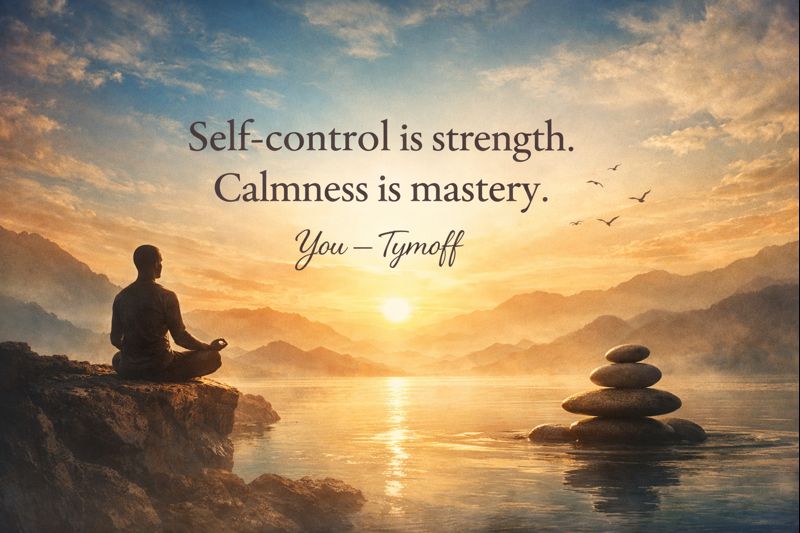
In today’s fast-paced world, where distractions and stress are constant companions, the ability to maintain self-control and calmness is more important than ever. The quote, “Self-control is strength. Calmness is mastery. You – Tymoff,” captures a timeless truth: true personal power comes not from external achievements, but from inner discipline and emotional regulation. While strength often implies physical or mental capability, Tymoff reminds us that the real strength lies in controlling our impulses, desires, and reactions. Similarly, calmness is not simply the absence of chaos but the mastery of one’s own mind, allowing clarity, focus, and rational decision-making even in difficult circumstances.
What is Self-Control?
Self-control is the ability to regulate one’s thoughts, emotions, and actions in alignment with long-term goals rather than immediate desires. It is an essential skill for personal development, mental health, and professional success. Individuals with strong self-control are more likely to make thoughtful decisions, maintain healthy relationships, and resist negative habits.
Key aspects of self-control include:
| Aspect | Description | Example |
|---|---|---|
| Emotional regulation | Managing emotional reactions | Remaining calm during an argument |
| Impulse control | Delaying immediate gratification | Avoiding unnecessary spending to save money |
| Focus | Maintaining attention on priorities | Completing work without distractions |
| Self-discipline | Following a planned routine | Exercising regularly even when tired |
Tymoff’s quote emphasizes that self-control is not a passive trait but a form of strength,h a muscle that can be developed through consistent practice and awareness.
Calmness as Mastery
While self-control is about restraining impulses, calmness is about mastering your inner state. Calmness allows individuals to respond thoughtfully rather than react impulsively. Mastery over calmness means achieving a balance between emotions and reasoning, leading to better decision-making, improved relationships, and mental peace.
Benefits of Calmness
- Enhanced problem-solving: Calm minds process information better.
- Reduced stress: Maintaining calm reduces anxiety and emotional burnout.
- Improved communication: Calm individuals listen and respond more effectively.
- Better leadership: Leaders who stay calm inspire trust and confidence.
Tymoff’s words suggest that calmness is not a passive state but a deliberate practice of mastering oneself, a skill that differentiates ordinary responses from extraordinary wisdom.
The Interconnection Between Self-Control and Calmness
Self-control and calmness are deeply interconnected. Strong self-control supports calmness because it allows you to regulate emotions and avoid impulsive reactions. Conversely, calmness strengthens self-control by providing a mental environment where decisions are rational and deliberate.
| Trait | How it Supports the Other | Practical Example |
|---|---|---|
| Self-Control | Enables calmness under pressure | Choosing not to yell when frustrated |
| Calmness | Reinforces self-control | Taking a deep breath before making financial decisions |
| Both | Promote emotional intelligence | Maintaining composure in stressful meetings |
By integrating these qualities, individuals can achieve personal mastery, where actions are intentional, reactions are measured, and life feels more balanced.
How to Develop Self-Control and Calmness
- Mindfulness Practices: Meditation and deep-breathing exercises improve awareness of emotions and reduce impulsive behaviors.
- Set Clear Goals: Having defined objectives strengthens focus and helps resist distractions.
- Routine and Discipline: Consistent daily habits build resilience and reinforce self-control.
- Reflect and Learn: Regular self-reflection helps understand triggers and emotional patterns.
- Practice Patience: Delaying gratification cultivates both self-control and inner calm.
Tymoff’s philosophy teaches that these qualities are not inherent but cultivated. Anyone can enhance self-control and calmness with deliberate practice and patience.
Real-Life Applications of Tymoff’s Wisdom
- Workplace: Remaining composed in stressful meetings ensures better decision-making.
- Personal Life: Avoiding impulsive reactions strengthens relationships.
- Health: Controlling unhealthy habits and maintaining routines improves physical and mental health.
- Leadership: Calm, self-controlled leaders inspire trust, respect, and loyalty.
Conclusion: Embrace Your Inner Strength and Mastery
Tymoff’s words remind us that true power lies within. Self-control is a strength because it enables us to act with intention rather than reaction. Calmness is mastery because it allows us to navigate life with wisdom, clarity, and emotional resilience. By cultivating both, we can achieve a balanced, fulfilling, and purposeful life.
The journey towards self-control and calmness is ongoing, but each step brings you closer to mastery over yourself and your circumstances. In essence, you, the individual, are the ultimate instrument of your own strength and calmness.