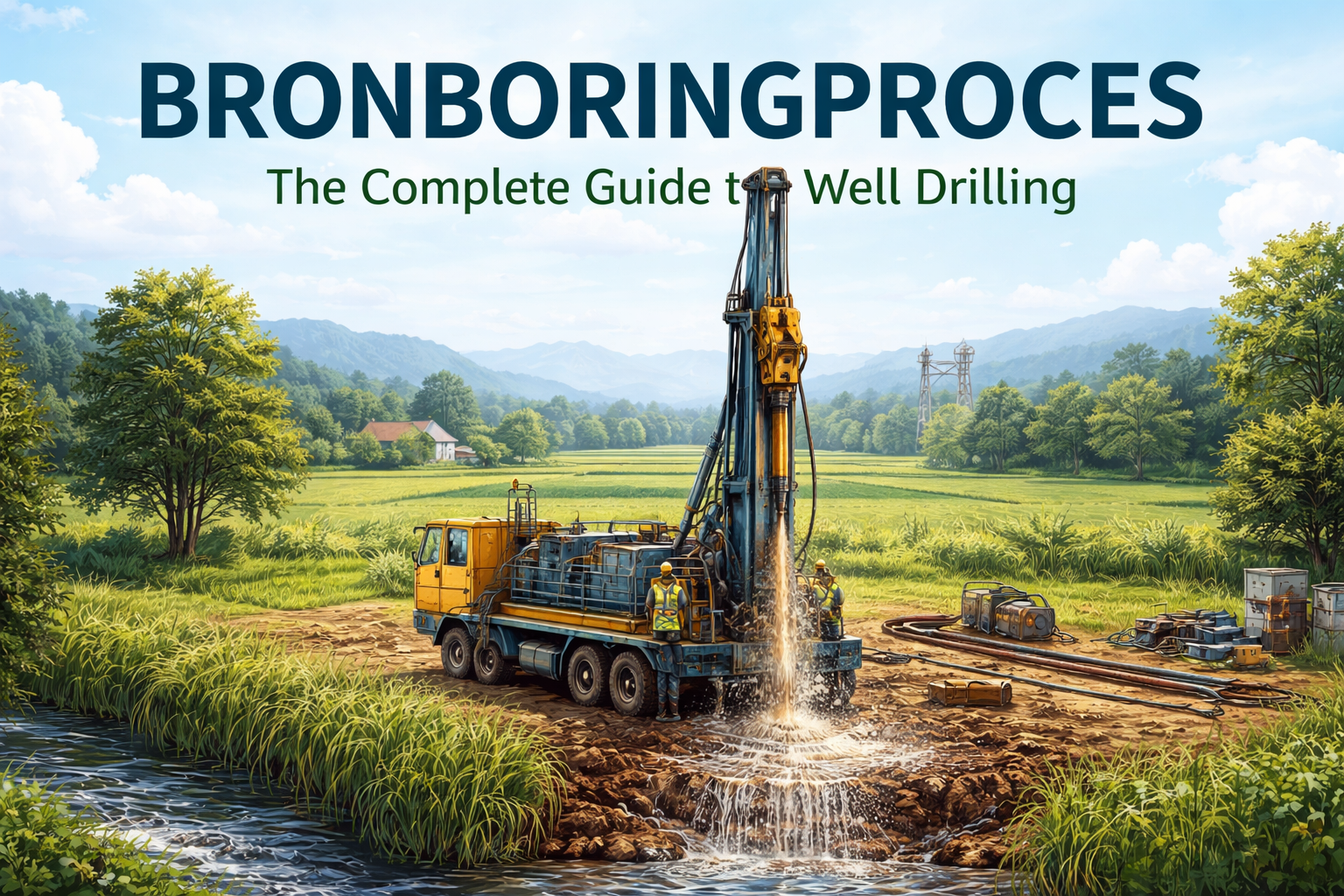
“bronboringproces” Water is one of the most valuable resources on Earth, and accessing clean groundwater is essential for homes, farms, and industries. This is where the bronboringproces becomes extremely important. The bronboringproces refers to the structured method used to drill a well and reach underground water sources safely and efficiently.
Table of Contents
Whether you are planning to install a private water well or simply want to understand how groundwater extraction works, learning about the bronboringproces can help you make better decisions. The process involves several stages, including site selection, drilling, casing installation, and pump placement.
In this comprehensive guide, we will explore everything about the bronboringproces, including its steps, technologies, benefits, costs, and best practices. By the end, you will have a clear understanding of how this process works and why it is crucial for sustainable water access.
| Aspect | Description |
|---|---|
| Definition | The process of drilling a well to access groundwater |
| Purpose | Provide clean water for homes, agriculture, or industry |
| Main Steps | 20–200 meters, depending on geology |
| Typical Depth | 20–200 meters depending on geology |
| Common Use | Site survey, drilling, casing, and pump installation |
What Is the Bronboringproces?
The bronboringproces is the technical procedure used to drill into the earth’s surface to reach underground water reservoirs known as aquifers. These aquifers store water that naturally accumulates between rock and soil layers.
A well created through the bronboringproces allows groundwater to be pumped to the surface. This water can then be used for drinking, irrigation, livestock, or industrial operations.
Unlike surface water sources such as rivers or lakes, groundwater is often cleaner and more stable throughout the year. This makes the bronboringproces a reliable method for ensuring long-term water supply.
Why the Bronboringproces Is Important
Access to groundwater is critical in many regions where municipal water systems are unavailable or unreliable.
Here are some reasons why the bronboringproces is widely used:
Reliable Water Supply
Groundwater is less affected by seasonal changes compared to surface water.
Cost Efficiency
After installation, wells can provide water for decades with minimal maintenance.
Sustainable Resource
When properly managed, groundwater extraction can be sustainable.
Independence
Homeowners and farmers can rely on their own water source rather than public utilities.
Because of these advantages, the bronboringproces has become a key solution for water security worldwide.
Main Steps in the Bronboringproces
The bronboringproces follows a series of carefully planned steps to ensure safety, efficiency, and water quality.
1. Site Investigation and Planning
Before drilling begins, specialists analyze the location to determine whether groundwater is present.
This step may include:
- Geological surveys
- Soil testing
- Hydrological analysis
- Local water regulations
Experts study underground rock layers to identify the best drilling location.
2. Choosing the Drilling Method
Different drilling techniques are used depending on the ground conditions.
Common methods include:
- Rotary drilling
- Percussion drilling
- Air drilling
- Mud rotary drilling
Each technique is designed to handle different types of soil, rock, or sand layers.
3. Drilling the Borehole
This stage is the core of the bronboringproces. Heavy drilling machines penetrate the earth to create a borehole.
The drilling depth varies depending on:
- Geological conditions
- Water table depth
- Intended water usage
Some wells may only require 30 meters of drilling, while others may exceed 150 meters.
4. Installing Well Casing
Once the hole is drilled, a casing pipe is inserted into the borehole.
The casing serves several purposes:
- Prevents the hole from collapsing
- Protects water from contamination
- Maintains structural stability
Most casings are made from steel or durable PVC materials.
5. Installing the Well Screen
A well screen is placed near the bottom of the borehole.
Its function is to:
- Allow water to flow into the well
- Block sand and sediment
This helps maintain water clarity and protect pumping equipment.
6. Gravel Packing
Gravel is sometimes placed around the well screen.
This improves water filtration and keeps fine particles from entering the well.
Gravel packing is especially useful in sandy soil conditions.
7. Pump Installation
After the well structure is complete, a pump system is installed.
Common pump types include:
- Submersible pumps
- Jet pumps
- Solar-powered pumps
These pumps transport groundwater from the well to the surface.
8. Water Testing and Finalization
The final stage of the bronboringproces includes testing the water quality and flow rate.
Professionals check for:
- Bacteria
- Minerals
- Chemical contamination
This ensures the water is safe for its intended use.
Types of Wells in the Bronboringproces
Different wells can be created depending on the project requirements.
| Well Type | Description | Typical Depth |
|---|---|---|
| Shallow Well | Used for small residential needs | 10–30 meters |
| Deep Well | Reaches deeper aquifers | 50–200 meters |
| Artesian Well | Water flows naturally due to pressure | Varies |
| Irrigation Well | Designed for agriculture | 30–150 meters |
Choosing the right type depends on groundwater availability and usage.
Equipment Used in the Bronboringproces
Modern drilling projects rely on specialized equipment.
Some common tools include:
Drilling Rigs
Large machines used to drill deep holes into the earth.
Drill Bits
Heavy-duty bits that cut through soil and rock layers.
Mud Pumps
Used to circulate drilling fluid during drilling operations.
Water Pumps
Extract water from the completed well.
These machines make the bronboringproces faster and more efficient.
Factors That Affect the Bronboringproces
Several factors influence the complexity and cost of drilling a well.
Geological Conditions
Rocky terrain requires stronger drilling equipment.
Depth of Water Table
Deeper water sources increase drilling time and cost.
Accessibility
Remote locations may require additional logistics.
Local Regulations
Some regions require permits or environmental assessments.
Understanding these factors helps ensure a successful bronboringproces.
Benefits of a Professional Bronboringproces
Hiring professional drilling experts provides several advantages.
Higher Success Rate
Experienced drillers can identify the best groundwater locations.
Safety Assurance
Professional equipment reduces risks during drilling.
Long-Term Durability
Proper installation increases well lifespan.
Compliance With Regulations
Professionals ensure all legal requirements are met.
These benefits make professional services worth the investment.
Environmental Considerations in the Bronboringproces
Responsible well drilling must protect natural resources.
Key environmental practices include:
- Avoiding over-extraction of groundwater
- Preventing contamination
- Monitoring water levels
- Proper well sealing
Sustainable drilling ensures groundwater remains available for future generations.
Cost of the Bronboringproces
The cost of drilling a well can vary significantly depending on several factors.
Typical cost components include:
- Geological surveys
- Drilling labor
- Equipment use
- Pump installation
- Water testing
In many regions, the bronboringproces may cost between $3,000 and $15,000, depending on depth and complexity.
Although the initial cost may seem high, a well can provide water for decades.
Maintenance After the Bronboringproces
A well requires regular maintenance to ensure long-term performance.
Important maintenance practices include:
- Annual water quality testing
- Pump inspections
- Well cleaning
- Monitoring water pressure
Proper maintenance prevents contamination and system failure.
Common Challenges in the Bronboringproces
While generally reliable, some issues can occur during or after drilling.
Dry Wells
Sometimes drilling fails to reach a productive aquifer.
Sediment Problems
Sand and silt may enter the well without proper filtration.
Pump Failure
Pumps may require replacement after years of use.
Water Contamination
Poor sealing can allow pollutants into the well.
Professional drilling companies reduce these risks through careful planning.
Future Innovations in the Bronboringproces
Technological advancements are improving well drilling efficiency.
Some innovations include:
- GPS-based drilling analysis
- Smart groundwater monitoring systems
- Solar-powered pumping solutions
- Automated drilling rigs
These technologies are making the bronboringproces more efficient, sustainable, and cost-effective.
Conclusion
The bronboringproces is a crucial method for accessing groundwater and ensuring a reliable water supply for homes, agriculture, and industries. From site evaluation to drilling, casing installation, and pump setup, every stage plays an important role in creating a functional and durable well.
Understanding the bronboringproces helps individuals make informed decisions when planning a well-drilling project. With proper planning, professional expertise, and regular maintenance, a well can provide clean water for many years.
As technology continues to improve, the bronboringproces will become even more efficient and sustainable, helping communities around the world secure safe and dependable water resources.
FAQs About Bronboringproces
1. What does bronboringproces mean?
The bronboringproces refers to the process of drilling a well to access underground groundwater sources for residential, agricultural, or industrial use.
2. How long does the bronboringproces take?
The process can take anywhere from one day to several days depending on the drilling depth, soil conditions, and equipment used.
3. How deep is a typical well in the bronboringproces?
Most wells range from 20 to 200 meters deep, depending on the location and groundwater availability.
4. Is the bronboringproces environmentally safe?
Yes, when done properly with professional equipment and proper regulations, the bronboringproces can be safe and sustainable.
5. How long does a well last after the bronboringproces?
A well can last 20 to 50 years or more with proper maintenance and regular inspections.